



“History teaches that those who anticipate the future shape it.” – Thucydides (adapted)
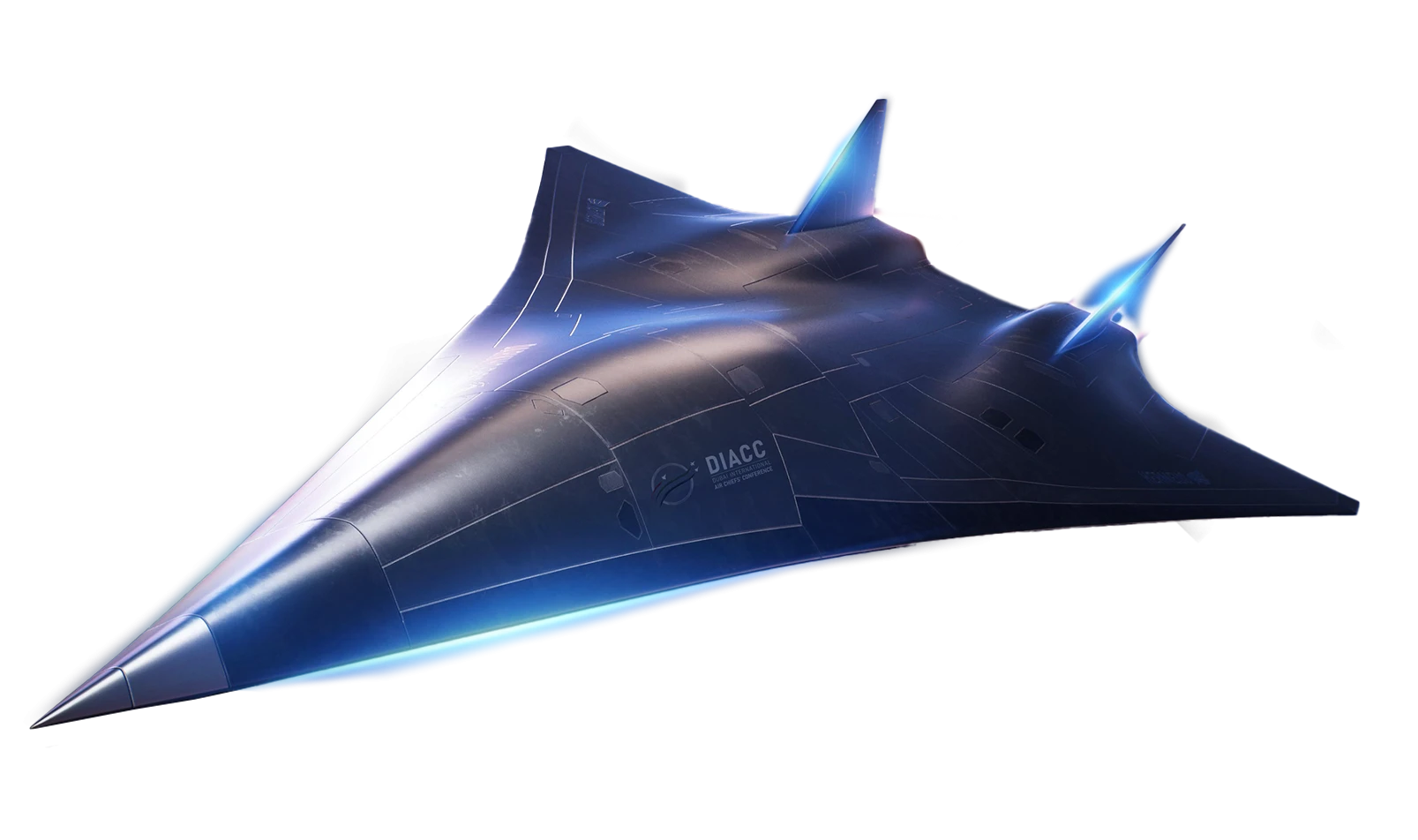
In today’s hyper-accelerated battlespace, airspace power is measured in milliseconds, not hours or minutes, across air, space, and the cognitive layers of decision-making. Hypersonic weapons, traveling at speeds exceeding Mach 5, manoeuvring unpredictably at altitudes between 30 and 65 kilometres, and operating in regimes once reserved for satellites, are fundamentally transforming the landscape of warfare. They are not merely faster missiles—they are catalysts for a profound reorientation of air and space power, compelling a rethinking of strategy, doctrine, and decision-making at every level. In this environment, milliseconds determine outcomes, and conventional approaches alone cannot secure advantage. At the same time, the human ability to think, anticipate, and integrate insight across domains remains the ultimate differentiator.
The launch of The AirSpace Power Journal renamed to reflect this operational continuum—is itself a statement of ambition and vision. By extending our scope from airpower to airspace power, we recognize that future advantage lies not in separate domains, but in the seamless integration of air, space, and cognitive layers of decision and effect. Hypersonics exemplify this convergence: compressing reaction times, challenging conventional sensing and interception systems, and compelling planners and operators to anticipate outcomes across new dimensions of speed, altitude, and manoeuvre. In such an environment, technological capability alone is insufficient; strategic judgment, comprehensive understanding, and the capacity to think critically and creatively remain decisive.
This inaugural issue, Hypersonic Horizons, brings together historians, strategists, scientists, and technologists to explore how hypersonic systems are redefining air and space power. The collection unfolds as a dialogue across time and disciplines—linking lessons from history to technological frontiers and connecting technical insight to the human and ethical dilemmas of tomorrow.
The opening essays by Professor Beatrice Heuser and Dr. Sidharth Kaushal frame the issue within the continuum of strategic thought. As both historian and strategist, Heuser situates the hypersonic age within the long arc of military innovation and adaptation, illustrating how anticipation, reflection, and intellectual rigor have always been at the heart of enduring advantage. Kaushal builds on this foundation, examining how deterrence logic and operational realities are transformed when weapons travel faster than decision itself. Together, they underscore that understanding the future requires learning from the past—and cultivating the capacity to think, synthesize, and adapt in the face of unprecedented complexity.
From strategy, the focus turns to space-enabled and technological perspectives. Dr. Peter Hays explores the implications of hypersonic attacks from orbit, while Professor Roberto Sabatini and his team at Khalifa University map the convergence of space and hypersonic technologies, redefining the architecture of future airspace power. Dr. Sana Pyka and Dr. James Grieve extend this discussion into the quantum domain, demonstrating how secure, high-bandwidth optical communication networks from the Arabian Peninsula can underpin regional resilience and autonomy in information operations. Across these contributions, the challenge is not simply technological—it is to develop frameworks of thought and decision-making that allow humans to harness these tools with foresight and discernment.
The issue then transitions to defence innovation and operational adaptation. Dr. Hamad Al Kaabi presents a reimagined vision of next-generation air defence, while Adel Binsanqoor and Dr. Thomas Withington explore cognitive air defence, radar challenges, and the cost-imposing strategies essential for countering hypersonic threats. Dr. Sherrill Lingel examines the strategic calculus behind defence investment and response, translating technical capability into operational and strategic advantage. All of these discussions highlight that maintaining an edge requires not only technical innovation, but the cultivation of thinking—anticipatory, integrative, and ethically informed—at every level of planning and execution.
Finally, Dr. Alberto Chierici addresses the human and ethical dimensions of hyper-accelerated warfare—where intent, autonomy, and accountability evolve at the same speed as technology itself. Ethics, cost, and societal consequences form a critical lens through which all decisions must pass, reinforcing the need for judgment, reflection, and moral clarity in a world of unprecedented speed and complexity.
Taken together, the contributions form a panoramic view of airspace power in the hypersonic age—bridging theory and application, hardware and cognition, ambition and restraint. Beyond technical and operational dimensions, the issue emphasises multi-domain integration. Hypersonics interact with air-breathing targets, space-based sensors, and emerging command networks. Understanding this interplay requires a perspective spanning orbital mechanics, atmospheric physics, decision science, and doctrine. Airspace power is evolving not as discrete capabilities, but as a system-of-systems—where advantage accrues to those who integrate awareness, effect, and decision-making across domains simultaneously, and where the human capacity to think comprehensively and adaptively remains paramount.
Strategic considerations are equally vital. Hypersonics introduce new ambiguities in escalation, deterrence, and signalling. Historical precedent offers guidance but not certainty; speed and unpredictability amplify risk, compressing decision windows at every level. Essays in this issue examine frameworks for managing escalation, the utility of strategic ambiguity, and doctrinal recalibrations required to maintain stability when kinetic effects manifest almost instantaneously and across previously unimagined ranges. Throughout, the message is clear: anticipating outcomes, integrating insight, and maintaining a deliberate cognitive edge are as critical as any technological advantage.
Taken together, Hypersonic Horizons offers more than a survey of emerging capabilities—it presents a framework for the future of airspace power. It illuminates the operational, doctrinal, and cognitive transformations necessary to remain relevant in a battlespace where speed compresses decisions and complexity defies precedent. Advanced systems—from hypersonics to artificial intelligence—offer extraordinary potential, but their full power is largely uncharted. The true differentiator lies in the ability to think comprehensively, anticipate effectively, and act with foresight and judgment in a hyper-accelerated environment.
The next generation of airmen and women must be prepared to navigate complexity, not merely operate advanced systems; to exercise critical thinking, not simply follow procedures; and to integrate technological mastery with moral, strategic, and cognitive insight. In this uncharted domain, discernment is as vital as speed, and sound judgment as decisive as technical capability.
“To meet the horizon is to anticipate it, integrate it, and shape it—turning speed into strategic advantage across air, space, and cognition.”